
Spiritual Emergence, Grounding & Returning to Wholeness
Sep 23, 2026There are moments in life when the way we have understood ourselves, our relationships and even reality itself begins to shift.
Sometimes that change feels expansive and liberating. Sometimes it feels confusing, frightening or deeply disorienting.
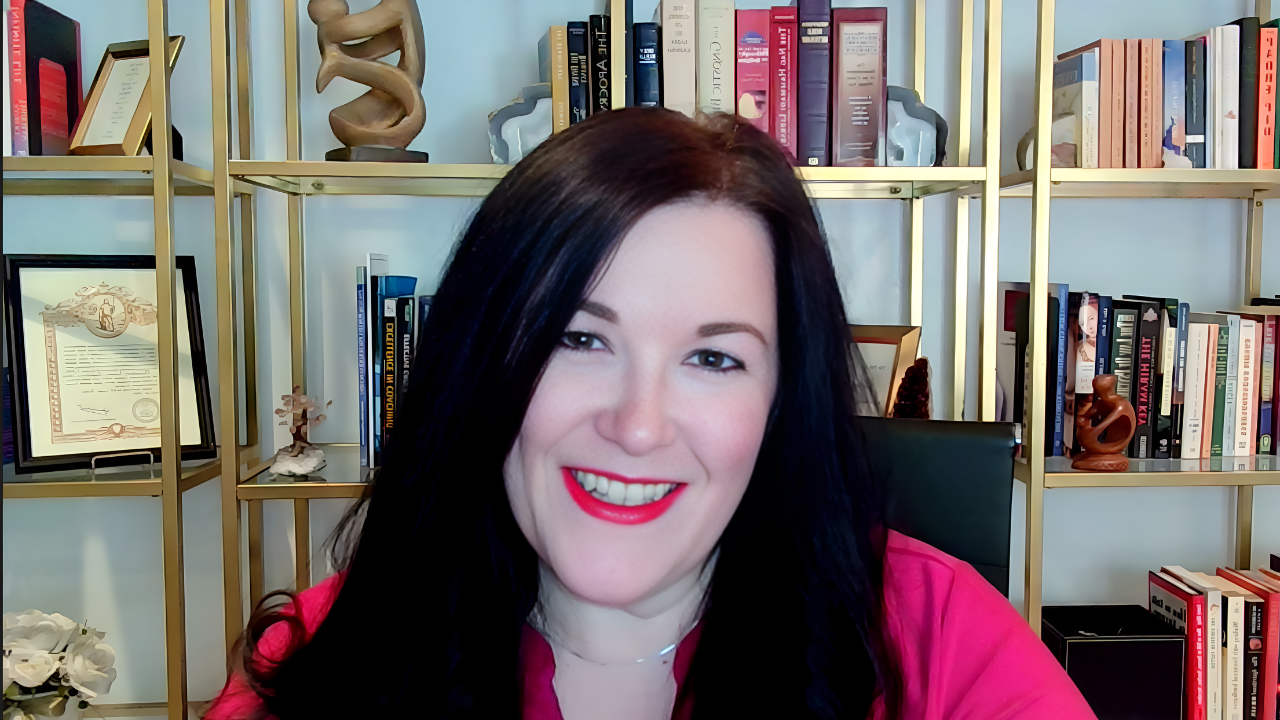
For Elizabeth J. Sabet, this territory became central to both her own journey and her work supporting others through what she calls psycho-spiritual emergence — experiences in which our consciousness, perception and understanding of ourselves begin to expand in ways that can challenge everything we thought we knew.
In my conversation with Elizabeth, we explored what happens when spiritual experiences become overwhelming, how to distinguish spiritual emergence from spiritual emergency, and why grounding and discernment are so important when our inner world is changing.
When your experience begins to change you
Elizabeth shared how non-ordinary experiences began entering her life and how, over time, they affected the way she understood herself and the world around her.
One of the important themes we explored was what happens when these experiences begin changing our values.
When something fundamental shifts inside us, the changes don't always remain internal. They can affect our relationships, our choices, our sense of identity and the communities we feel at home within.
There can be a temptation to immediately search outside ourselves for an explanation.
But Elizabeth repeatedly brings people back towards their own inner teacher.
The importance of grounding
Spiritual experiences can be profound, but profound does not automatically mean easy to integrate.
Elizabeth spoke about the importance of considering the whole person — including psychological, emotional and physical wellbeing — when someone is moving through an intense experience.
Grounding becomes essential.
Rather than continually reaching for expanded states, there is value in learning how to bring what we discover back into the body and into everyday life.
That integration is part of the journey.
Spirituality isn't separate from being human. We still have relationships, responsibilities, bodies, emotions and choices to navigate.
Spiritual emergence or spiritual emergency?
One of the most important distinctions in our conversation was between spiritual emergence and spiritual emergency.
Spiritual emergence can involve an expansion of consciousness, perception or awareness. It may be challenging, but there can still be an underlying capacity to engage with life and integrate what is happening.
A spiritual emergency, by contrast, can involve a level of overwhelm or disruption that significantly affects a person's ability to function.
Recognising the difference matters because sometimes spiritual meaning and appropriate professional support need to exist alongside one another.
There is no failure in asking for help.
And there is no need to abandon the spiritual dimension of an experience simply because psychological or physical support may also be needed.
Discernment allows us to hold both.
Returning to your own inner authority
Another thread running through Elizabeth's work is sovereignty.
When we are experiencing something we don't understand, it can be tempting to hand our authority to someone who appears to have the answers.
But Elizabeth's approach is ultimately about guiding people back towards their own inner teacher.
That doesn't mean rejecting guidance, mentorship or support.
It means remembering that another person can walk alongside you without becoming the authority over your experience.
This is particularly important within spiritual communities, where discernment matters deeply.
Not every person who presents themselves as a guide is necessarily working from integrity, and spiritual language can sometimes be used in ways that create dependency or exploitation.
Learning to listen inwardly becomes part of our protection.
When truth creates a storm
Elizabeth spoke beautifully about the moment when a new truth enters our lives and creates what she describes as a storm.
Sometimes discovering something true about ourselves doesn't immediately make life easier.
It may challenge a relationship.
It may change our values.
It may reveal an old pattern that no longer fits.
It may ask us to make choices we weren't expecting to make.
And this is where one of the most powerful practices from our conversation emerged:
the willingness to be uncomfortable.
We don't always need to immediately fix, explain or escape what we're experiencing.
Sometimes the practice is to witness it.
To be with it.
To listen.
To allow ourselves enough space to discover what is actually happening beneath the noise.
Coming back to wholeness
Perhaps one of the most beautiful ideas in Elizabeth's work is that wholeness isn't necessarily something we have to create.
It may be something we remember.
The Spirit Path approach begins from the premise that there is already something whole within us, even when our lives feel fragmented or uncertain.
The journey, then, becomes less about becoming someone else and more about returning to what is already true.
That feels deeply connected to the work I explore through the voice: learning to distinguish the noise from the deeper knowing, and creating enough inner coherence to hear what is actually ours.
We don't have to walk the same path
We also explored what happens when our spiritual transformation changes our relationships.
What happens when our partner, family or friends don't understand what we're experiencing?
What happens when our path begins to look very different from theirs?
Elizabeth offered an important reminder: everybody, including the people we love, has their own path.
We can honour our own transformation without requiring someone else to understand it in exactly the same way.
And we can love people without needing them to walk the same road.
A more grounded spirituality
For me, one of the most valuable threads in this conversation was the invitation to hold spirituality with both openness and discernment.
To remain curious about what we experience while also staying connected to our bodies, our relationships, our everyday lives and our capacity to make conscious choices.
Spiritual growth doesn't require us to leave our humanity behind.
Perhaps it asks us to inhabit it more fully.
And sometimes the deepest movement isn't towards somewhere new at all.
It's the journey back to ourselves.
Points Of Discussion:
01:15 – Elizabeth’s Journey Into Non-Ordinary Experiences
04:00 – Finding Your Voice & Creating Space for Others
08:20 – Sensing Energy & Learning to Trust What You Know
14:35 – What Is Psycho-Spiritual Emergence?
18:22 – Spiritual Emergence vs Emotional Crisis
22:16 – Grounding, the Higher Self & the Inner Teacher
26:17 – Guiding People Back to Their Own Truth
33:16 – The Spirit Path & Returning to Wholeness
40:00 – Spiritual Emergence vs Spiritual Emergency
48:03 – Relationships, Acceptance & Staying True to Yourself
55:34 – Discernment, Spiritual Communities & Practitioner Attunement
01:03:07 – What Still Humbles Us About Being Human?
Resources & Links:
Websites:
https://elizabethjsabet.com/
https://psychospiritualsafety.com/
https://thehopewholensscenter.org/
Instagram: https://www.instagram.com/elizabethjsabet/
About Elizabeth J. Sabet:
Elizabeth J. Sabet, CPC, ACSLC, is a psychospiritual integration coach, Honorary Intertribal Medicine Woman, trainer, and founder of the Institute for Transformational and Transpersonal Coaching (ITTC), where she has spent over 12 years training coaches to move into deeper dimensions of themselves and their practice. She is the creator of the SpiritPath Coaching Model and the architect of both the Certified Spiritual Integration Coach and Certified Transformational and Transpersonal Coach certification programs, a rigorous initiation into the kind of coaching the awakening world is calling for. Elizabeth also co-created the Psychedelic Psychospiritual Safety training with Dr. Katrina Michelle, equipping practitioners for the most complex territory at the intersection of psychology, spirituality, and non-ordinary states. In her private practice, she works one-on-one with individuals navigating spiritual emergence, psychospiritual transformation, and the call to live and create from a deeper level of wholeness. Through her Soul-Level Practice program, she helps depth-oriented professionals expand their own inner landscape — not just their toolkit — so that who they are in the room becomes as powerful as what they know. She writes about psychospiritual shamanic integration, conscious creation, and the path of emerging whole at elizabethjsabet.com.
Stay connected with news and updates!
Join our mailing list to receive strategies for healing, transformation and impact.
We hate SPAM. We will never sell your information, for any reason.
